

Work On Your Work

Whether you realize it or not, you have probably heard people complain about and criticize their job or whatever it is they do. This is not just limited to paid work, but extends to schoolwork, internships, and other tasks. Most humans loathe almost all work and believe they are almost always deserving of a vacation. This is the problem: it is one thing for one to say they need a vacation, but it is completely different for one to truly believe that they need and deserve that break from work. Don’t get me wrong, I’m am certainly not saying that we should work every day until we die. Vacations are great, but it is so important to have the right reasons and understanding behind your motives. I’ve narrowed the list of reasons as to why people feel like they need to opt-out of work down to three:

  1. The system
  2. They’re too good for their job
  3. They’ve done enough

The first reason is one that I talk about a lot with my close friends. It’s the thing we all dread….The system. To me, the system is the fall of the American Dream, monotonous helpless cycle many feel they can’t get out of, and to me the system is the long gray line of American manhood. Growing up we’re taught that where you’re from doesn’t have to be where you’re going. That if, “You work hard, you do the right thing, you clean up.” And this is all true, but for many Americans, this society we live in, this system, does everything it can to make the journey to your goals as difficult as possible. Our society, rather than promoting and nurturing creativity and curiosity, rather than encouraging young people to take risks and see the world, and rather than idolizing values and morals instead of money and objects, has trapped us. This system causes us to make career decisions we don’t want to make, do the same thing every day, become stuck in our personal ideologies, become more closed-minded, and become filled with more hate and less love.

The reality is that our society is becoming more and more like this “system.” However, what but nothing is a man or woman who commits themselves blindly to a system that has no true intentions? If you hate this system and think that the right way rebelling against it is to not participate, you’re probably wrong. Boycotting, rebelling, rioting, using entails doing the opposite of the thing you’re upset with, but in this case, we absolutely can not, should not, stop working. Rather, we need to work harder and dedicate ourselves to putting life and goodness into the work we do. Yes, some industries are nasty and it can be so hard to see anything good come from them, just look at American politics right now. However, the very perceived nature of these industries does not reflect their possibilities. We can not avoid this system by withdrawing ourselves. We are to avoid this system by committing ourselves. Committing ourselves to a new work ethic, a new driving force of creativity, a new heart as a society.

Another popular but subtle reason we hate working is because many people think that they are “too good” for their job. This is ridiculous, this infuriates me, and if you think this you are certainly not too good for your job. This is an absolutely toxic mindset and is a reason behind why millennials are thought to be the worst generation to every be (but that’s a different story). It is possible, and even common for one to run out of challenges and interest at their job, but this in no way is synonymous to them being better than that job. I believe this sense of false confidence and entitlement stems from the idea that people are too concerned with living their life and only smelling the roses rather than building a life. These same people think that once they’re around 30 they’ve found the work and job they’re supposed to do for a lifetime, when in fact there are always new challenges. It should be no surprise that when you commit yourself to a long term routine, you may get complacent. However, being complacent does not and never will mean you’re better than what it is you’re complacent o
ver. Challenge yourself to stop living your life and start building it, as anti-motivational speech esque that may sound.
steve-jobs-dont-settle-quote
Finally, the third reason I have identified as to why many people hate working is that they think they’ve done enough. They think they’ve done their time and the day where they hang up the gloves and kick up their feet on a beach somewhere in the Keys for years to come has finally arrived. Before I dive into this let me be clear: I am not anti-retirement, nor am I against those who retire, and I am not against those who retire early (whatever “early” means). Though I do believe that there is a right time to take your foot off the gas and start collecting retirement benefits, this transition is very personal and differs on a case to case basis. CEO Gary Vaynerchuk believes that we shouldn’t be afraid to start a new phase of our careers because of our age, contrarily, getting older is all the more reason to start that new project, to launch your own company, to take on that extra proposal, etc.. I hink that you should ask yourself a couple of questions before you decide to dig your feet in the sand. Ask yourself if you’ve done all you can? Is there anything left to do?  Can I make things better? Where can my curiosity still take me? Evaluate your purpose and how its changed over the past X number of years.
Don’t just look back, look forward.

It’s true that work, whether its a job or schoolwork, can be tedious and just suck, but that one assignment, that one task, or that one job certainly doesn’t represent them all, and you’d be naive to think that. Rather than giving in, kick it up a notch and challenge yourself. Build your life- and you will create crazy things.


Thomas Fusillo


The Airplane Theory

One thing that has always fascinated me are the thoughts that come to mind when I’m on an airplane looking down at the cities and the plains or on the ground looking up at an airplane. While both of these scenarios provoke similar thoughts, they are different. Each possesses its own unique texture. I believe these scenarios are representative of where we are and where we are going.

A few months ago, while I was at work, something happened that happens all the time: a plane about 5 minutes after takeoff from Austin-Bergstrom International Airport caught my eye as it plunged into the white clouds and out of view. Without realizing it, I immediately stopped what I was doing and just stared as the gears of my mind began to churn. The sight of a plane going to some destination that was unknown to me made me think of where I have been, where I am, and where I am going. But it also made me think of the people on board that plane. Who were they, what are their stories, and where are are they going?

As I currently sit on board an eastbound New Jersey Transit train, I am surrounded by people. I will be surrounded by millions more once I arrive in Manhattan, New York, yet we don’t usually look at the people we are (literally) close to. We don’t concern ourselves with the lives of strangers whom we just catch walking past us out of the corners of our eyes. When I look up at a plane however, my head is filled with questions, predictions, and thoughts. From the ground a plane seems miniscule. Its windows the size of buttons and its wings as long as twigs. How crazy something as simple as perspective can be. Chances are, there are over two-hundred people, souls, human lives on board that plane. Each with a different story, each with different pains and triumphs, but all with the same destination. At least for now.

In his poem “The Hollow Men,” T.S. Elliot writes,

The eyes are not here
There are no eyes here
In this valley of dying stars
In this hollow valley
This broken jaw of our lost kingdoms

It seems as if every now and then, when we look straight into someone’s eyes, we see what they’ve seen, feel what they’ve felt, and live what they’ve lived. Looking up at a plane is just a front for this. When you think about it, it makes you think that while some people on that plane may have had a very different past and very different plans going forward, there are also people on that plane that have lived a life similar to yours with goals and ambitions similar to yours. It makes you think that you’re not alone in what you’re trying to do. Most importantly, you realize that what you’re doing has been done before in some capacity.

Life can be much broader once you discover one simple fact: Everything around you that you call life was made up by people that were no smarter than you. And you can change it, you can influence it… Once you learn that, you’ll never be the same again.

-Steve Jobs


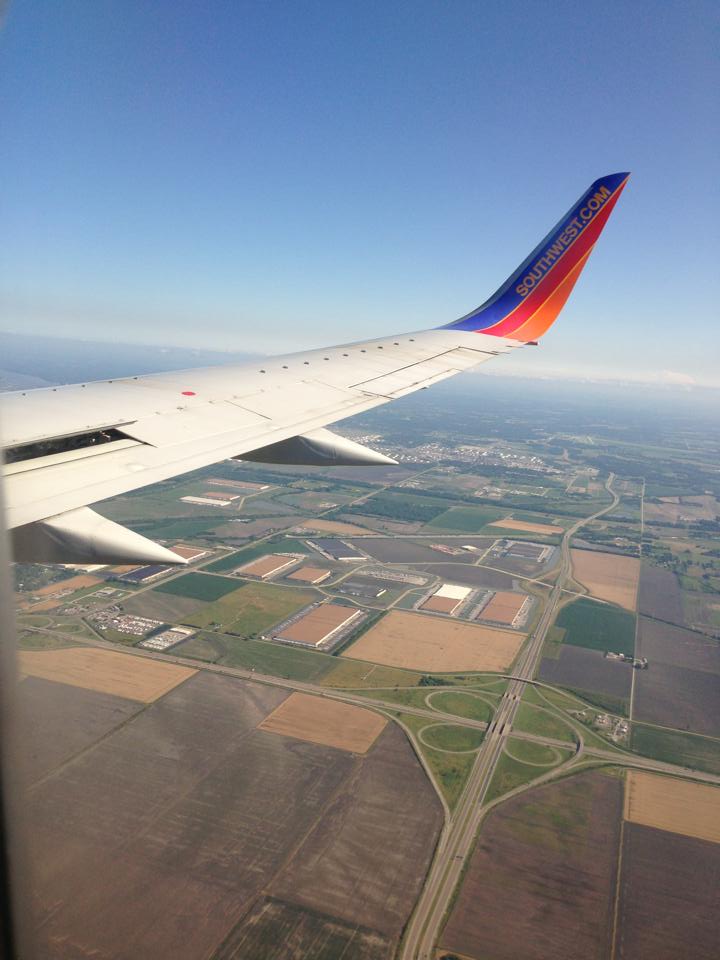
Now flip the tables. You’re on the plane coming from some place and going to another. The terrain below appears to be sectioned into quadrants. Buildings that are hundreds of feet tall look as though they barely escape the ground of the planet which now seems so distant. Finally, if you’re still in take-off or approach, you see the cars. What a few hours ago were heavy pieces of forged metal moving at top speeds are now comparable to those little red bugs you’ve seen crawling around your back patio.

Now you are going somewhere. But the people down there? They are there. Wherever it is you are flying over, the inhabitants of that land below are in their place. Their lives are happening. They’re going to work, doing homework, watching TV, showering, & sleeping. They’re also worrying, caring, fearing, hating, and loving. For those people, today is just another day. And for that moment, that individual moment, they aren’t going anywhere. You are.

Yes, there are three letters on your boarding pass abbreviating your destination. You know where you’re headed. I, however, posit that you’re not completely sure where you’re going.  I’m sitting on the plane and I look out of the window at the ground, the sky, and the world, and I can only think about how everything I’ve done and everything I’ve worked for is so that I can finally get to that destination. That place I have in my head that I see myself at. But this puzzle that we call life has variables. Things change. Random twists of our fates happen all the time. So who really knows where we’re going?


After all, we’re only human.


Tom Fusillo


Unyielding Hope

It’s three o’clock in the morning and you have work or class at eight. All the while you’re up asking yourself, asking the world, and asking God what the point of going to that class or showing up to work is. All of the sudden things appear to be so distant, so out of touch, and so much more unrealistic then they were just earlier that day. We can ask why this happens, but the most important question to ask is where to go from here? Should we give up, start over, or keep going?

The interesting thing about when people are in the above described situation is that they will almost always continue on the charted course. They’ll end up going to work tomorrow, they’ll go to class, and they’ll keep up with their usual routine. Do they keep going because they’re simply too lazy or believe it is too hard to change their lifestyle? Or is it because deep inside every human being there is almost always piece of hope?

Hope is personal. For some, they may not realize or think that hope has played a big role in their lives, while for others it is all they have. When I was applying to colleges, one of the essays I had to write asked the cliche question, “What is your favorite word and why?” My answer  was hope. I said that my favorite word was hope not just because I had a lot of hope at that time, but also because I wouldn’t have gotten to that point in my life without it. Here I am over two years later holding on to that same piece of hope. It’s that piece of hope that screams in your ear every morning tell you to get up. That voice in your head that makes you stay up an extra few hours to finish the work you need to finish. Hope along with faith is what keeps you going when there’s no earthly reason for you to carry on with your mission.

So why do we keep going? It’s simply a natural human response. We, as humans, are wired to never surrender our goals. We keep going because of that unyielding hope deep in our hearts. It is fair to say that some have more hope than others, but that doesn’t mean that each and every one of us doesn’t have something to fight for. Something to keep pushing forward for. Take a look at what Steve Jobs said in Apple’s Think Different campaign:

“Here’s to the crazy ones. The misfits. The rebels. The troublemakers. The round pegs in the square holes. The ones who see things differently. They’re not fond of rules. And they have no respect for the status quo. You can quote them, disagree with them, glorify or vilify them. About the only thing you can’t do is ignore them. Because they change things. They push the human race forward. And while some may see them as the crazy ones, we see genius. Because the people who are crazy enough to think they can change the world, are the ones who do.”

Maybe we shouldn’t just view hope as a virtue, but also as a challenge. Challenge yourself to take whatever hope you have, and turn it into a physical manifestation through your daily routine and thoughts. Be one of the crazy ones. Because after all, by doing nothing you have everything to lose and nothing to gain. However, by holding on to that hope and just trying to push the human race forward, you have nothing to lose and everything to gain.

“He is no fool who gives what he cannot keep to gain what he cannot lose.” -Jim Elliot


Thomas Francis Fusillo